316L Powder Sintered Filters
Mo-added, carbon ≤0.03% - the workhorse grade for food, pharma and chloride-containing duties
Overview
316L is not "better stainless" in general - it is 316 with molybdenum added and carbon pulled down. Molybdenum is what carries chloride and dilute acid; low carbon is what survives welding and sintering without sensitization. Both strengths have boundaries, and past the boundary the money buys nothing.
Use 316L when: chloride is present but not seawater-grade (≤200 mg/L at room temperature); the part contacts food or pharma media needing CIP and steam sterilization; the environment is coastal air or organic/dilute mineral acid; the part is welded or uneven in section.
304 is enough (save 15-25%) when: the medium is clean water, pure water or chloride-free process liquid; dry gas or compressed air without condensate; general dust duty with no sanitary requirement.
Neither works when: seawater or brine (chloride in the thousands of mg/L), hydrochloric or hydrofluoric acid, wet chlorine gas, >98% sulfuric acid, hot alkali. One-line rule: chloride concentration times temperature - past 316L's comfort zone, move to titanium or a nickel alloy. Same 200 mg/L that swims for years at 20 °C can pit through in a year at 60 °C.
Honest advice included: if your medium is room-temperature water, we quote 304, not 316L. Long-term customers come from that habit.
Specifications
| Grade | 316L (022Cr17Ni12Mo2 / UNS S31603), certificate per batch |
|---|---|
| Diameter | φ20 - 200 mm (tubes); plates and discs same alloy line |
| Length | Up to 1500 mm, to drawing |
| Rating | 0.2 - 100 μm |
| Porosity | 30 - 45% (tuned to rating) |
| Continuous temperature | ≤400 °C (oxidizing atmosphere discussed separately) |
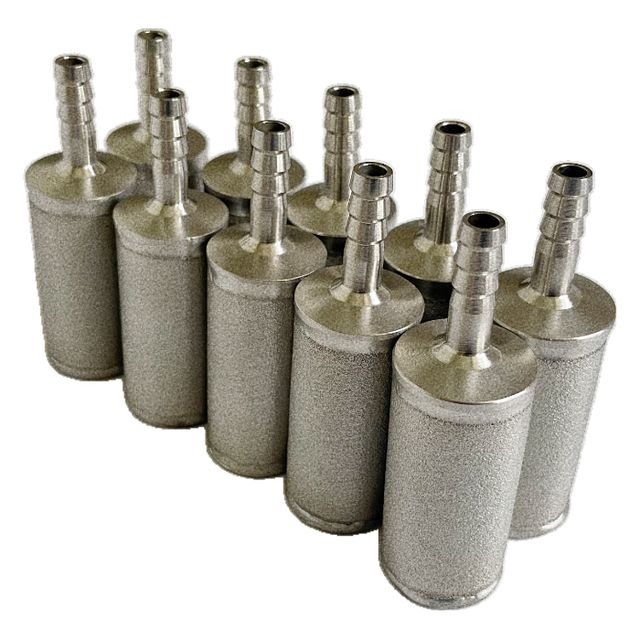
| Fittings | Thread, barb, flange, Tri-Clamp, DIN11851, bright end |
FAQ
- Is 316L worth it over 304?
- Only where chloride, sanitary requirements or sensitization risk exists. Otherwise 304 saves 15-25% with equal life.
- Seawater service?
- No - 316L pits in seawater. Titanium or Monel for seawater duties.
- Food-grade documentation?
- Material certificate per batch; surfaces suitable for CIP and SIP.
Send your medium, temperature, pressure and target rating to [email protected] - drawings and annual quantities welcome. Free samples; material certificate and measured bubble-point / permeability data with every batch. Lead time 7-15 days standard, 10-20 for composite builds.
Email [email protected]